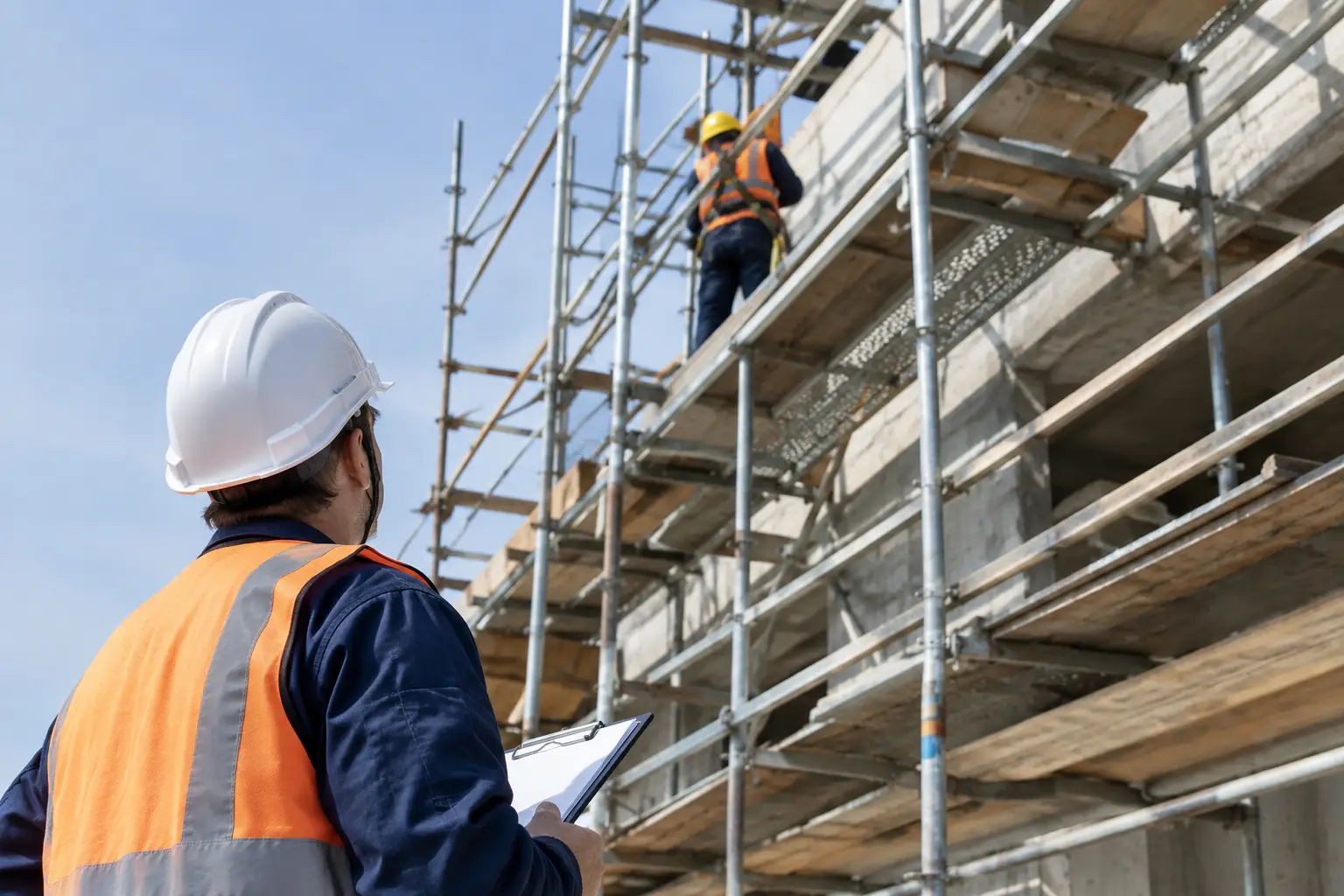
A dropped fitting, a damaged shopfront or a crew member off work after a fall can turn a profitable contract into a serious financial problem within minutes. The costly scaffolding risks to insure are not limited to the obvious working-at-height incident either. Your vehicles, hired kit, materials in transit and contractual responsibilities can all leave a business exposed when the wrong cover is in place – or no cover is in place at all.
For a fast, trade-focused quote, have your turnover, wage roll, height of work, employee numbers, vehicle details and plant values to hand. It helps a specialist broker place the right information with suitable insurers first time, rather than leaving you to untangle a generic policy after an incident.
1. Injury to the public and damage to third-party property
Public liability is usually the starting point for a scaffolding business. It is designed to respond if your work causes injury to someone outside your business or damage to property belonging to someone else.
Think of a pedestrian injured by falling debris, a scaffold board damaging a parked car, or a loading operation cracking paving outside a commercial premises. Claims can also arise where a scaffold obstructs access, affects a neighbouring building or is alleged to have been erected incorrectly.
Many principal contractors, local authorities and clients will ask to see evidence of public liability before work begins. Where a pavement or highway permit is involved, the required limit may be stated in the permit conditions. A £5 million limit is common, but £10 million may be required for larger sites, local authority work or contracts with strict terms.
The limit is only one part of the picture. Check the policy is suitable for the height, type and locations of work you undertake. A lower-priced policy with a restrictive height condition can be a false economy if your normal contracts exceed it.
2. Injury or illness affecting your crew
If you employ staff, employers’ liability insurance is generally a legal requirement in the UK. It protects the business against compensation claims from employees who are injured or become ill because of their work.
Scaffolding crews face clear physical exposures: falls, manual handling injuries, struck-by incidents, slips during loading, and accidents involving lorries, lifting equipment or site traffic. Even where training, inspections and safe systems of work are taken seriously, an accident can still result in a costly claim and time away from work.
Do not assume labour-only subcontractors automatically sit outside your responsibility. Insurance obligations can depend on the real working relationship, including who controls the work, supplies equipment and directs the operative. This is worth discussing openly when arranging cover. Getting the classification right is far easier than arguing about it after a claim.
Personal accident cover is different. It can provide a stated benefit if an insured person suffers a qualifying accidental injury, helping with the immediate financial pressure of being unable to work. It is particularly relevant for self-employed scaffolders who do not have sick pay to fall back on.
3. Falls and work at unrestricted heights
Working at height is fundamental to the trade, but it is also an area where policy wording matters. Some general construction policies apply height restrictions or need an insurer’s agreement above a stated level. If your work includes taller commercial structures, industrial sites, towers or complex access arrangements, make this clear before cover starts.
Unlimited-height-risk options may be available for suitable risks, but this does not mean every height or activity is automatically covered without conditions. Insurers will still want to understand your experience, risk assessments, supervision, training, inspection routines and claims history.
Be precise about the work you do. Temporary roof systems, chimney access, loading bays, stair towers, edge protection and scaffold design work can alter the risk profile. A policy based on a vague description of “builder’s scaffolding” may not reflect the contracts you actually take on.
4. Theft, loss and damage to tools, equipment and plant
A locked compound is no guarantee that valuable kit will still be there in the morning. Scaffolding tools, generators, harnesses, laser levels and small plant are attractive targets, while damage in transit and accidental damage on site can be just as disruptive.
Tools and equipment cover can help replace insured items after theft or damage, subject to the policy terms, security requirements and excess. Keep an up-to-date equipment list with serial numbers, photographs and replacement values. It makes arranging the right sum insured easier and can save valuable time if you need to make a claim.
Own plant cover is for machinery your business owns. Hired-in plant cover is for equipment you hire under a rental agreement, where you may be responsible for loss or damage. These are not interchangeable. A hired telehandler or other item of plant can carry a substantial contract value, and the hire company may continue charging while it is unavailable.
Check whether the policy covers hired plant’s continuing hire charges following an insured loss, as well as the equipment itself. The answer depends on the insurer and wording, so it should never be assumed.
5. Vehicle accidents and materials in transit
Your vans, lorries and trailers are part of the job, not just a way of getting to it. They carry crews, tube, boards, fittings and tools through busy streets, tight estates and congested construction sites. A road traffic accident can create vehicle repairs, third-party injury claims, replacement vehicle costs and delays to an active contract.
Fleet or commercial vehicle insurance should reflect how each vehicle is used. Include business use, carriage of own goods, trailer use and the right drivers. If employees take vehicles home, or if a vehicle regularly travels between jobs outside your usual area, say so when obtaining a quote.
Also consider what happens to tools and equipment left in vehicles overnight. Cover may be available, but insurers often apply strict security conditions, such as approved alarms, locked storage or limits on unattended vehicles. Leaving expensive kit visible in a van can put both the equipment and a claim at risk.
6. Contract works and the job itself
Public liability protects against damage you cause to others. It does not necessarily pay to reinstate the work you are carrying out after an insured event. That is where contract works cover can matter.
For example, a storm damages a partly completed temporary roof, a fire affects materials awaiting installation, or malicious damage ruins work already completed on site. The commercial impact can include replacing materials, returning labour to site and missing the agreed programme.
Whether you need contract works cover depends on your contract terms and where responsibility passes between you, the principal contractor and the client. Read the insurance clauses before signing. If the contract makes you responsible for works, materials or hired equipment, the policy needs to match that responsibility. Do not rely on another party’s site insurance without written confirmation of what it covers and when.
7. Legal disputes, recovery costs and contractual pressure
Not every expensive problem starts with an injury or damaged asset. A customer may withhold payment, a supplier may dispute an invoice, or an employment issue may require legal advice. Defending even a weak allegation can absorb management time and legal fees at exactly the point you need to keep jobs moving.
Legal expenses cover can provide access to legal advice and, where a claim meets the policy conditions and has reasonable prospects of success, help with certain legal costs. The detail varies widely, including the types of dispute covered and any minimum dispute value.
It should not be treated as a substitute for good paperwork. Keep signed quotations, agreed variations, delivery records, inspection documents, permits, photographs and site correspondence. Clear records can prevent a disagreement becoming a formal dispute and give insurers or legal advisers a much stronger starting point if it does.
How to set the right level of protection
The cheapest quote is only useful if it responds when your business needs it. Start with the contracts you are pursuing, not simply the work you did last year. A move from domestic jobs to commercial projects, a new lorry, additional employees or regular hired plant can all change the cover required.
Be honest about turnover, wage roll, claims, work at height and subcontractor arrangements. Understating these details may reduce the premium initially, but it can cause problems at renewal or during a claim. Equally, do not pay for limits and extensions you genuinely do not need. The right approach is proportionate cover, based on the work, assets and contractual liabilities you carry.
Scaff Cover can help make sense of those moving parts, from public and employers’ liability through to vehicles, tools, plant and contract works. A specialist conversation before the job starts is usually quicker and less costly than trying to repair a coverage gap afterwards.
The next time a client sends over a contract or asks for insurance evidence, use it as a prompt to check your protection rather than simply forwarding last year’s certificate. It could be the small bit of admin that keeps one difficult incident from becoming a business-stopping bill.