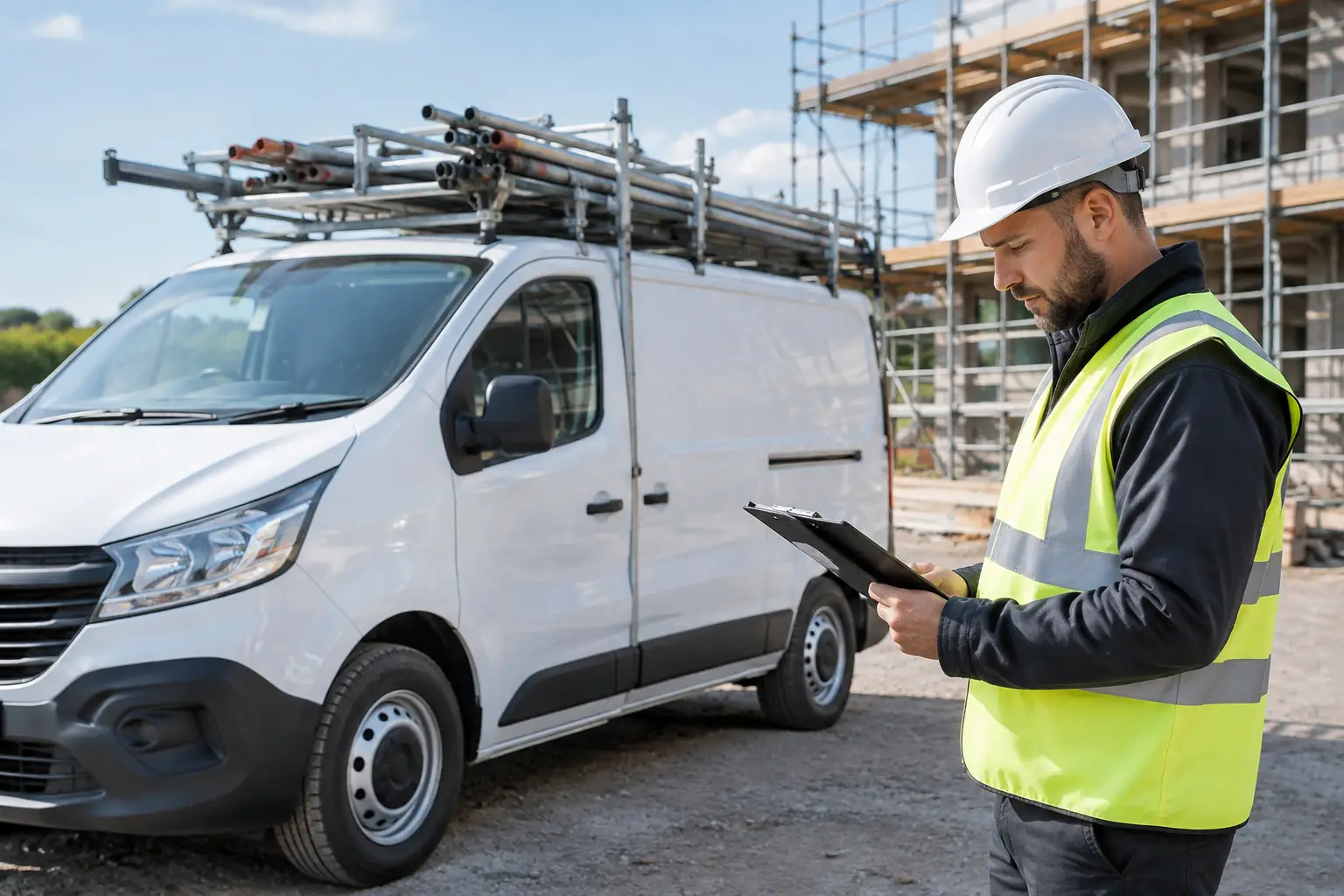
A scaffolding van is rarely just a way of getting to site. It carries the crew, boards, fittings, hand tools and the kit that keeps the next job moving. Knowing how to insure scaffolding vans properly means looking beyond the cheapest commercial motor quote and making sure the policy reflects what happens between the yard, the road and site.
A policy that is right for a domestic tradesperson may not be right for a scaffolder running early starts, multiple drivers, loaded vehicles and regular travel between jobs. Get the details right from the outset and you are less likely to face an awkward conversation if a van is stolen, written off or involved in an accident.
Start with the right type of van insurance
At the legal minimum, every van used on the road needs third-party motor insurance. This covers injury to other people and damage to their property where you are at fault. It will not pay to repair or replace your own van after an accident, fire or theft.
For most scaffolding businesses, comprehensive commercial van insurance is the sensible starting point. It can cover damage to your vehicle as well as third-party liabilities, subject to the policy terms, excess and any exclusions. With a loaded van and a diary full of jobs, the cost of replacing a vehicle after a serious incident can be far greater than the saving made on a basic policy.
Third-party, fire and theft cover can suit some older or lower-value vans, particularly where the business could fund repairs or replacement itself. That is a cash-flow decision, not simply a premium decision. Consider what would happen if the van were damaged on Monday morning and you still had wages, hire charges and site commitments to meet that week.
Make sure business use is declared
Do not assume that a standard business-use category tells the full story. Tell the insurer or broker that the van is used for scaffolding work, carries materials and equipment, travels between sites, and may be parked at a yard or at employees’ homes overnight.
If the vehicle is used for more than getting one person to a fixed workplace, it needs to be rated accordingly. Hauling scaffolding components, collecting equipment, visiting several sites and transporting a crew are all material details. So is occasional use outside normal hours, such as an emergency call-out or a weekend collection from a hire company.
Be accurate about annual mileage too. Underestimating it can look tempting when arranging cover, but it creates problems if the vehicle’s recorded mileage tells a different story after a claim.
Insure the driver, not just the van
A good motor policy needs to match the people who will actually drive. Many scaffolding firms start with one owner-driver, then add labourers, supervisors or family members as work grows. If someone is behind the wheel regularly, they should be named or covered under the agreed driver arrangement.
Named-driver cover is often more controlled and may be cheaper where only a small number of experienced drivers use the van. Any-driver cover can make operational sense for a larger crew, but it usually costs more and commonly comes with age or licence restrictions. A 19-year-old improver with a recent licence may not be covered simply because the policy says any driver.
Declare convictions, previous claims and penalty points honestly. Insurers assess these factors differently, so a specialist broker can help find a market that understands the trade rather than treating a scaffolding van as a generic courier vehicle.
Also check the licence category needed for the van’s weight. Payload adds up quickly when boards, tubes and fittings are involved. Overloading creates safety risks, can lead to enforcement action and may complicate an insurance claim. The legal weight limits still apply even when a last-minute job needs more kit on site.
Protect tools, equipment and materials separately
One of the most expensive misunderstandings in commercial motor insurance is assuming that everything in the back of the van is automatically covered. Usually, the motor policy is there for the vehicle. Hand tools, power tools, harnesses, ladders, fittings and other trade equipment may need separate tools and equipment cover.
Check whether cover applies while equipment is in the van, at a locked yard, on site and in use. Theft from an unattended vehicle can come with strict conditions, such as removing tools overnight, using a secure storage box, fitting an approved alarm or parking in a locked compound. The exact requirements vary, so read them before relying on the cover.
Scaffolding materials can need separate consideration too. If you transport goods or equipment that belong to a client, a contractor or a hire firm, goods in transit or hired-in plant cover may be relevant. Your own stock and your own plant are not necessarily treated in the same way as a customer’s property.
This is where policy packaging matters. Commercial motor, tools cover, own plant, hired plant and public liability serve different purposes. Duct tape cannot fix a gap between policies, especially after a theft or road accident.
Choose cover that keeps the business moving
A van off the road is more than a repair bill. It can mean missed jobs, delayed collections and a crew waiting for transport. Ask about courtesy van provision, replacement-vehicle options and whether the policy provides help after an accident, breakdown or theft.
A courtesy van is not always like-for-like. A small car may not solve a scaffolding contractor’s problem, and a standard panel van may not have the carrying capacity you need. If a suitable replacement is critical, discuss that before you buy the policy rather than discovering the limitation during a claim.
Breakdown cover is also worth considering, particularly for vans travelling long distances or operating outside local hours. It is not a substitute for motor insurance, but roadside recovery can prevent a simple mechanical fault becoming a lost day’s work.
Legal expenses cover can be useful where there is a dispute following a non-fault accident, such as recovering uninsured losses or dealing with a contract-related motoring issue. It should be viewed as an additional layer, not a guarantee that every disagreement will be funded.
When fleet insurance may make more sense
If your business has several vans, arranging each one on a separate policy can become time-consuming and hard to manage. Fleet insurance places eligible vehicles under one policy, often with a common renewal date and a simpler administration process.
There is no universal point at which fleet cover becomes better value. It depends on the number and type of vehicles, drivers’ records, claims history and how often vehicles change. For some firms, it becomes practical at two or three vehicles. For others, individual policies remain more competitive.
Fleet cover can make it easier to add a newly purchased van or temporarily substitute a vehicle, but do not assume additions are automatic. Speak to the insurer or broker before putting a new vehicle into use. The same applies if you begin operating a tipper, pickup, trailer or heavier vehicle alongside standard vans.
Give accurate information when requesting a quote
A clear quote request helps avoid delays and reduces the risk of unsuitable cover. Have the following information to hand:
- each van’s registration, value, modifications and usual overnight location;
- estimated annual mileage, business activities and the areas you travel to;
- all regular drivers’ ages, licence details, claims and convictions;
- security features, including alarms, immobilisers, trackers and locked compounds; and
- details of tools, plant or materials carried, plus their approximate value.
Be open about signwriting, roof racks, internal racking and any modifications. These are normal features for many working vans, but they can affect security, repair costs or how the vehicle is rated. If the van is leased or on finance, check whether the agreement has insurance requirements, including approved repairers or a requirement to keep comprehensive cover.
Reduce the chance of a costly claim
Insurers want to see sensible risk management, and so should any business owner responsible for a crew. Use secure overnight parking where possible, keep keys controlled, and remove high-value portable tools when the van is left unattended. A tracker may be worthwhile for higher-value vehicles, but it will not replace the need for proper physical security.
Driver management matters just as much. Check licences periodically, set expectations around mobile phone use and reversing, and make sure loads are secured. A minor reversing incident can still lead to vehicle downtime, excess costs and a renewal premium increase.
Keep photographs and receipts for equipment, record serial numbers, and report thefts or accidents promptly. If an incident happens, preserve dash-cam footage where available and take photographs of vehicle positions, damage and the surrounding area when it is safe to do so.
Get trade-aware advice before you commit
The right van insurance is not always the policy with the lowest headline price. It is the one that recognises your actual working pattern, has sensible conditions for the kit you carry and gives you a workable route back on the road after a claim.
Scaff Cover can help scaffolding businesses arrange motor and wider trade insurance around the way they operate, from a single working van to a growing fleet. A straightforward conversation before cover starts can save a great deal of stress later. Get the details sorted now, so a problem with a van does not stop the job along with it.