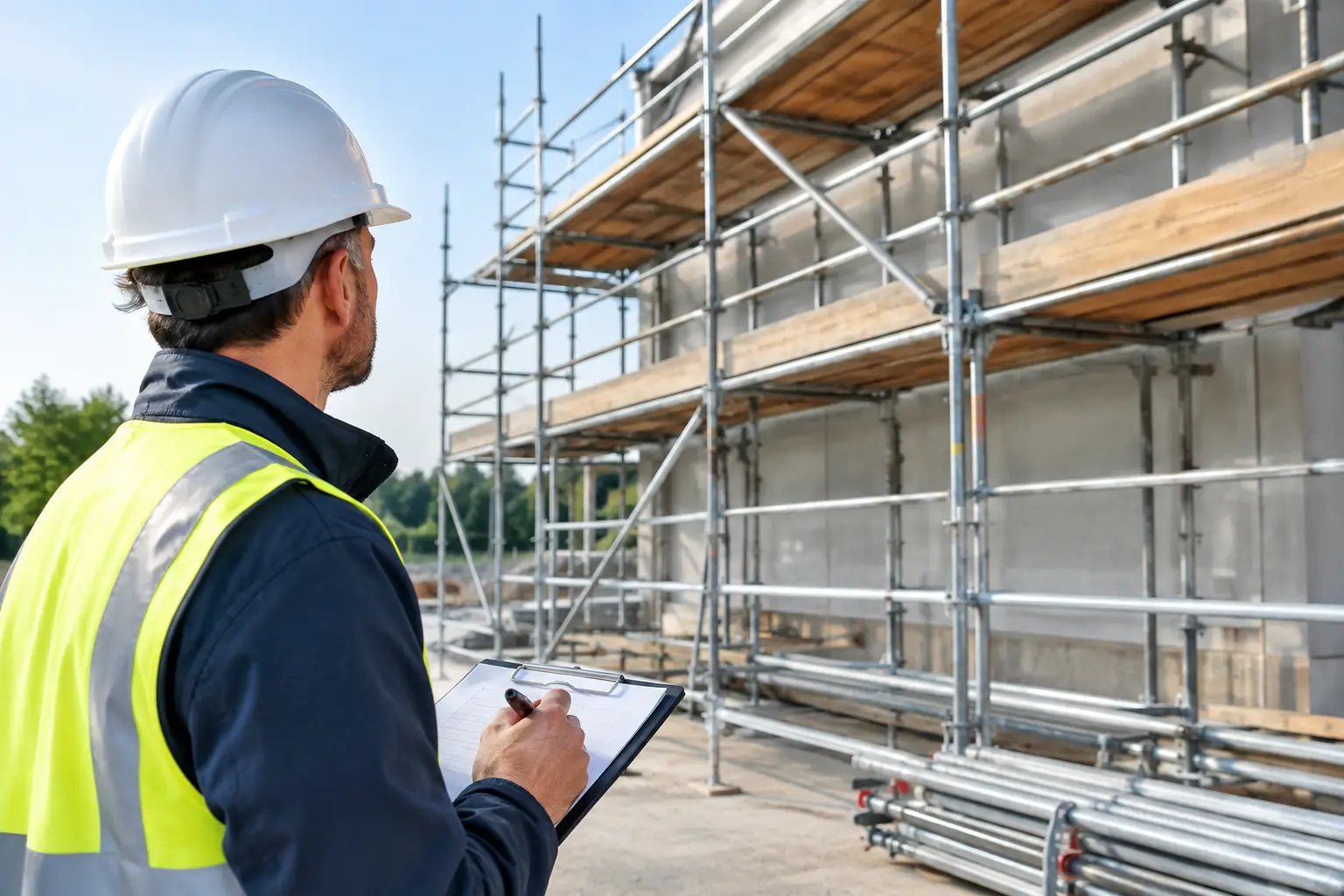
Need hired equipment cover for an upcoming job? Get the details of the hire, the replacement values and your contract terms ready before arranging a quote. It makes it far easier to insure hired scaffold equipment properly and avoid finding a costly exclusion after something goes wrong.
Hiring equipment can make good commercial sense. It lets a scaffolding business take on a larger contract, cover a breakdown, or access specialist kit without tying up cash in a major purchase. But once hired gear arrives on site, the responsibility for loss or damage often sits with the hirer. That responsibility can be far wider than many contractors expect.
A dropped loading bay gate, vandalism overnight, a theft from a compound or damage while equipment is being moved between sites can all leave you facing a hire company invoice. The right insurance is there to protect your business cash flow when the equipment is not yours, but the bill may still be.
What hired scaffold equipment cover is for
Hired-in plant and hired equipment cover is designed for equipment you hire, lease or borrow for use in your business. For scaffolders, that may include temporary fencing, loading bays, lifting equipment, generators, site cabins, hoists, aluminium towers or specialist access equipment. Depending on the arrangement, it may also apply to hired scaffold components.
The policy is intended to cover your legal liability under the hire agreement for accidental loss of or damage to the equipment, subject to the policy terms, excess and stated limits. The key point is that a hire company does not necessarily absorb the loss simply because it owns the item. If you signed the agreement, you may be responsible while it is in your custody or control.
This is different from cover for plant or equipment your business owns. Own plant cover protects assets you have purchased. Hired-in plant cover addresses the equipment you are contractually responsible for but do not own. Many established contractors need both, particularly where jobs vary in size and location.
Why public liability may not be enough
Public liability insurance is essential for scaffolding work. It can respond where your work causes injury to another person or damage to their property, such as damage to a client’s building or a parked vehicle. However, it is not a replacement for hired equipment cover.
Property in your care, custody or control is commonly subject to restrictions within liability policies. In straightforward terms, equipment hired to your business is likely to be treated differently from a neighbour’s property damaged by falling materials. Assuming public liability will pay for a damaged hired hoist or stolen generator is a risk worth avoiding.
There can also be a contractual issue. Hire agreements sometimes make the hirer liable in circumstances where they might not otherwise have been legally liable. Insurance policies will have their own wording around contractual liability, so the hire terms and insurance cover need to be considered together.
Check the hire agreement before the kit leaves the yard
The hire agreement is not just paperwork to sign on a busy morning. It tells you when responsibility starts and ends, what you may be charged for, and whether the hirer requires a particular type or level of insurance.
Read the sections covering loss, theft, damage, recovery charges and off-hire procedures. Responsibility may begin when equipment is delivered, rather than when it is first used. It may continue until the hire company has physically collected it and checked it back in. That creates a potential gap if equipment is left on an unsecured site after the job is finished.
Pay particular attention to the declared replacement value. A contractor may hire several items individually that add up to a substantial exposure when considered together. If you have a maximum hired-in plant limit of £25,000 but have £45,000 of equipment on hire during a major project, the limit may be too low for the risk you are taking.
Ask whether the agreement includes a damage waiver. A waiver can reduce what the hire company charges following an insured event, but it is not automatically the same as insurance and may carry exclusions, excesses and conditions. It may not cover theft, unexplained disappearance, misuse, or the full recovery and administration costs. Check rather than assume.
How to insure hired scaffold equipment with the right limit
Start with the largest total value of hired equipment you could have in your possession at any one time. Do not base the figure on an average week if your work regularly includes larger projects, seasonal peaks or last-minute hires to meet programme changes.
Include equipment at your yard, on site, in transit and awaiting collection where you remain responsible. If you hire from more than one supplier, add the values together. The insurer needs a realistic maximum exposure, not the amount on your most recent invoice.
When arranging cover, be clear about what you hire and how it is used. For example, a firm hiring a compact lifting machine, goods hoist and temporary stair system has a different risk profile from a sole trader occasionally hiring a small generator. Details such as locations, security, transport arrangements and the experience of operators can all matter.
It is also worth checking whether the policy covers hired equipment while in transit. Scaffold businesses are mobile by nature. Equipment can be vulnerable while loaded on a lorry, stored overnight before a site start, or moved between jobs. Separate motor, tools, goods in transit or plant policies may be relevant depending on the item and the circumstances.
Conditions that can affect a claim
Insurance is most useful when the basics are handled properly on site. Theft claims in particular can turn on whether the equipment was secured in line with the policy conditions. A locked compound, suitable chains and ground anchors, immobilisers, keys removed from machinery and recorded serial numbers are sensible controls as well as good site practice.
Keep a clear hire record showing the supplier, hire reference, equipment description, serial numbers, value, delivery date and expected collection date. Photographs at delivery and collection can help where damage is disputed. If equipment moves to another site, update your own records promptly rather than relying on someone remembering where it went.
Only allow trained and authorised people to operate specialist hired equipment. Damage caused by unsuitable operation, deliberate acts, wear and tear, gradual deterioration or poor maintenance may not be covered. The same applies where equipment is used outside the manufacturer’s intended purpose or the hire company’s agreed terms.
If an incident occurs, tell the hire company and your insurer or broker as soon as possible. Take photographs, preserve CCTV where available, report theft to the police and avoid admitting liability before the facts are clear. Delays can make an already awkward claim harder to resolve.
Common gaps worth asking about
A policy should be checked against the practical way you work, not just the headline description. These are common areas to raise when discussing cover:
- The maximum value of all hired equipment at any one time, including peak contract periods.
- Theft from an unattended site, unsecured compound, vehicle or temporary storage location.
- Equipment in transit, loading and unloading, or left pending collection after off-hire.
- The excess payable for theft, accidental damage and claims involving machinery.
- Hire charges that continue while damaged equipment is repaired or replaced, if these are your responsibility under the agreement.
Not every insurer treats these points in the same way. A lower premium can be attractive, but it may carry a higher excess, a tighter theft condition or a limit that falls short when a contract grows. That trade-off should be visible before you commit.
Match cover to the rest of your scaffolding insurance
Hired equipment cover works best as part of a properly joined-up insurance arrangement. Public liability, employers’ liability where you employ staff, owned tools and equipment, fleet or motor cover, contract works, legal expenses and personal accident cover each deal with different parts of the job.
For example, if a hired piece of access equipment is damaged during a road-side installation, the claim may involve the equipment itself, a vehicle, a third party and site management questions. One specialist conversation can help identify where covers overlap, where they do not, and what documents your client or local authority may need.
Scaff Cover can help contractors assess hired plant and equipment exposures alongside the wider risks of working at height, moving materials and operating across multiple sites. The aim is straightforward cover that reflects the jobs you actually take on, not a generic package built for a different trade.
Hired kit should help you win work, not introduce a liability you only discover when the invoice arrives. Before the next delivery turns up, check the agreement, total the replacement values and make sure your insurance reflects the real responsibility sitting with your business.