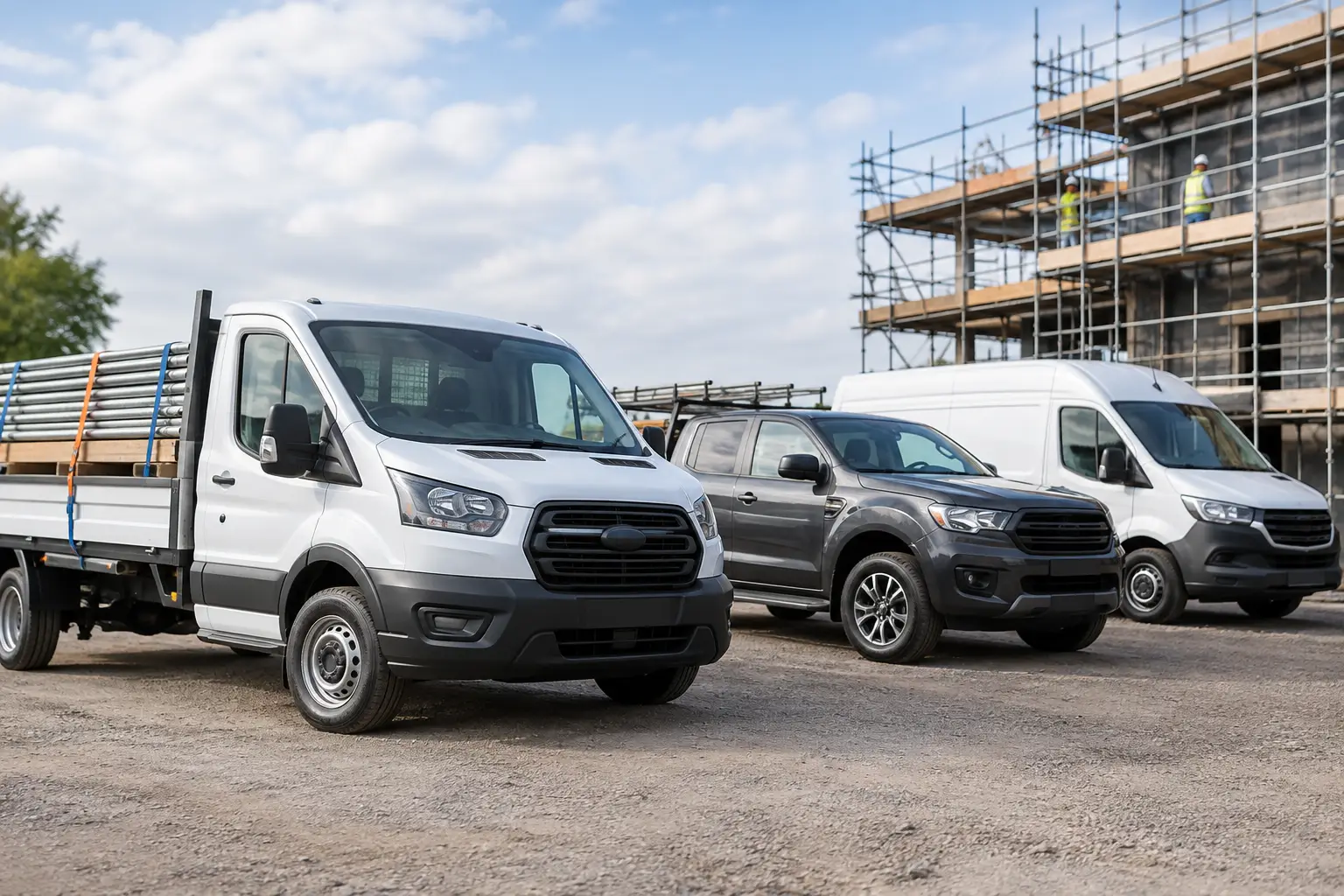
A stolen impact wrench is frustrating. A stolen lorry load of tube, fittings, boards and specialist access equipment can stop several jobs at once. That is why equipment cover limits deserve more attention than a quick estimate on a proposal form. The figure you choose needs to reflect what it would cost to get your operation moving again, not what you paid for a few items years ago.
For scaffolders, equipment is not a side issue. It is how you earn. Get the limit wrong and a valid claim may still leave a sizeable gap to fund from the business.
What equipment cover limits actually mean
An equipment cover limit is the maximum amount an insurer will pay, subject to the policy terms, following insured loss or damage. The wording matters because scaffolding businesses often need several types of cover, each with its own limit.
Tools cover usually applies to portable hand tools and power tools. Own plant cover can apply to equipment you own, such as lifting equipment, generators, compressors, trailers or mechanical plant. Hired-in plant cover is designed for equipment you are contractually responsible for while it is on hire. Stock or materials may need separate treatment too, particularly if tube, boards and fittings are stored away from your yard or left at a site.
Do not assume one overall figure automatically covers everything. A policy may set a total sum insured, an individual-item maximum, a theft limit from an unattended vehicle, and a separate excess. Some items may be covered only at a named location unless you have selected cover while in transit or on site.
There is another distinction worth making. Equipment cover limits are not the same as public liability limits. Public liability responds to claims from third parties for injury or property damage where you are legally liable. Equipment insurance concerns property belonging to you, or property you have hired and are responsible for. Both matter, but they solve very different problems.
Why scaffolding firms are easy to underinsure
A scaffolding firm rarely keeps all its kit in one place. Some will be in the yard, some loaded onto a lorry, some on a live project and some may be with a subcontractor or temporarily stored at another location. Values change as contracts overlap and the business adds equipment over time.
The usual mistake is basing cover on a rough purchase-cost figure. Replacement costs can be higher, especially when like-for-like equipment has to be bought quickly. If a theft leaves a crew without essential tools, the commercial cost is more than the invoice value. There may be downtime, delayed handovers, rearranged labour and a difficult conversation with the principal contractor.
Hired plant adds another pressure point. Hire agreements commonly make the hirer responsible for loss or damage, even where the incident was not as simple as a piece of kit being dropped or misused. Before equipment arrives on site, check who carries the insurance responsibility, the replacement value stated in the agreement, and whether the policy includes the relevant category of hired plant.
How to calculate the right limit
Start with an up-to-date equipment register. It does not need to be complicated, but it needs to be real. Record each significant item, its description, serial number where available, age, replacement cost and normal location. Keep invoices, photographs and hire agreements alongside it. This makes the insurance conversation clearer and can make life easier if you ever need to evidence a claim.
For portable tools, total the amount that could realistically be lost in one incident. Think about the busiest point in your working week, not a quiet Friday afternoon. If two crews have vans loaded for separate jobs, could both loads be exposed to theft overnight? If the answer is yes, your limit should reflect that scenario if the policy is intended to cover it.
For owned plant and larger equipment, use today’s replacement cost or the valuation basis required by the policy. Some policies settle on a new-for-old basis for eligible equipment, while others take age, wear and depreciation into account. Never guess which applies. Ask, and make sure the sum insured matches the basis of settlement.
For hired-in plant, use the maximum value of hired equipment you could be responsible for at any one time. It is not enough to insure the average weekly hire bill. A single high-value item, or several items on one contract, can take you well beyond that figure.
Finally, allow for growth. If you are taking on bigger contracts, adding a second vehicle or building another gang, last year’s equipment total may already be out of date. Reviewing limits before the annual renewal is sensible, but changes in the middle of the year can matter just as much.
The limits hidden inside the main limit
The headline sum insured is only part of the picture. Ask your broker to explain the sub-limits and conditions that could apply to your normal working pattern.
A per-item limit is particularly relevant for expensive laser levels, specialist lifting gear, generators or equipment carried on a vehicle. If an item costs £3,000 to replace but the policy pays no more than £1,500 for any single item, the overall tools limit will not solve the shortfall.
Theft-from-vehicle conditions also deserve close attention. Insurers may require tools to be concealed, securely locked away or removed from the vehicle overnight. They may specify security requirements for vans, compounds and storage units. These conditions are not small print to skim past. They are practical claim requirements, and they need to work with the way your crews actually operate.
Location limits matter too. If your equipment is stored at a yard, a lock-up, a domestic address and several sites, make sure the policy reflects that. Cover for theft from an unattended site, temporary storage, transit and hire locations can differ. A good policy discussion should cover where the kit goes, not just what it is worth.
Avoiding underinsurance after a loss
Underinsurance is where the declared value is lower than the true value at risk. Depending on the policy wording, insurers can reduce a claim proportionately through an average clause. In simple terms, if the equipment was insured for half of its proper value, you may receive only half of an otherwise valid claim.
Not every policy operates in the same way, which is why the policy schedule and wording should be checked rather than assumed. The question is not merely, “What premium can I get this for?” It is, “If we lose a full load next month, what does this policy actually pay?”
Be accurate when declaring claims, convictions, security arrangements and the type of work undertaken. Leaving out a detail may appear to save time at quotation stage, but it can cause serious problems later. Straight answers give a broker the best chance of finding terms that fit the risk properly.
Equipment cover limits and cash flow
Higher limits can increase the premium, so there is a genuine trade-off. But choosing the lowest figure is not always the cheaper decision. A £10,000 shortfall after theft can be far more damaging than the additional cost of setting the right limit in the first place.
Consider the excess as well. A higher excess may reduce the premium, but it means your business funds more of every claim. For small, frequent tool losses, that could make claiming uneconomical. For a firm mainly concerned with a severe, one-off loss, a higher excess may be more workable. It depends on your cash reserves, claims history and appetite for risk.
Scaff Cover can help translate your equipment list, hired plant exposure and working locations into limits that make sense for the jobs you take on. The aim is not to load a policy with cover you will never use. It is to avoid finding out, at the worst possible moment, that the figure on the schedule was based on an outdated estimate.
Questions worth asking before you buy
Does the policy cover equipment left in a van overnight?
Possibly, but only if the policy includes that cover and you meet its security conditions. Check the overnight theft limit, the definition of an unattended vehicle and any requirements for alarms, lockboxes or secure parking.
Are hired tools and hired plant included automatically?
Usually not automatically. Hired-in plant is often a distinct section of cover, and hired tools may be treated differently from owned tools. Check the hire agreement and arrange the appropriate limit before collection.
Should I insure scaffolding materials as equipment?
It depends on the policy and the materials involved. Tube, boards, fittings and other stock may sit under stock, contract works or another property section rather than portable tools cover. Describe exactly what you need insured and where it is kept.
The most useful equipment limit is the one built around your busiest realistic day: the tools loaded, the plant hired, the materials in use and the places your crews work. Keep that picture current, and your cover has a far better chance of keeping the job moving when something goes wrong.